After the 2017 Solar Eclipse my astronomy juices started flowing again. I had stopped using my Quantum 4 telescope because I had so much difficulty finding anything. (I now know that a red dot finder would have made finding objects much easier than the right angle finder scope) I decided to try a computer controlled "GOTO" scope and purchased a Celestron NexStar 8 Evolution in October 2017 and I've been very very happy with it.
Seeing - is a meaure of sky stability
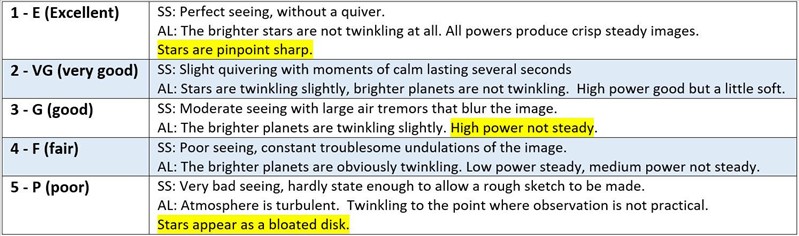
SS( SkySafari number), AL (Astronomical League's wordings) Astronomical League Seeing and Transparency Guide
Transparency - for the faintest star you can see, truncate the magnitude to get the rating.
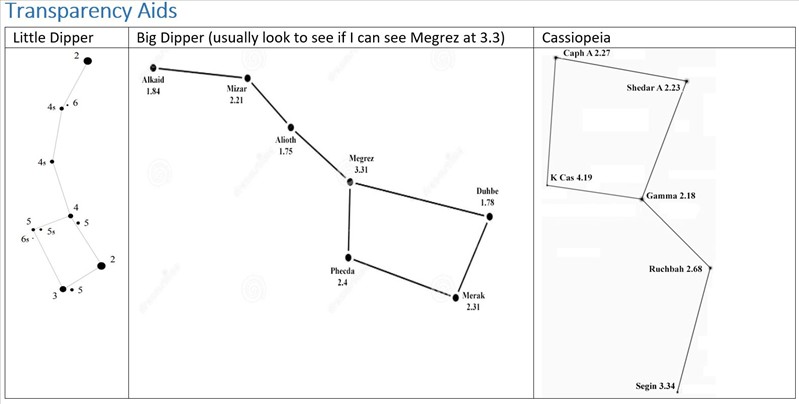
From home I can usually on see a couple of stars in the little dipper. I usually try for Megrez in the big dipper.
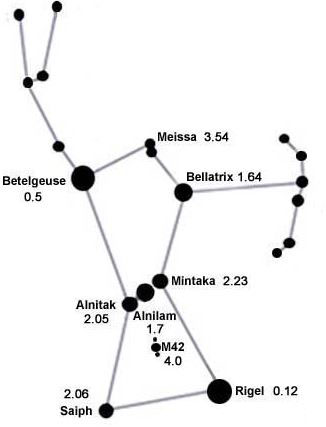
Normally from home I cannot see Meissa
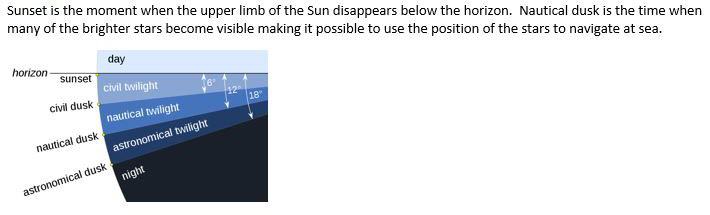
Twilight
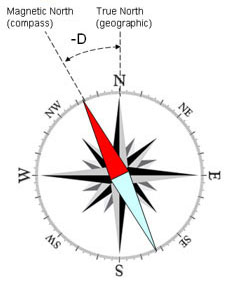
Compass deviation from home (-11 degrees)
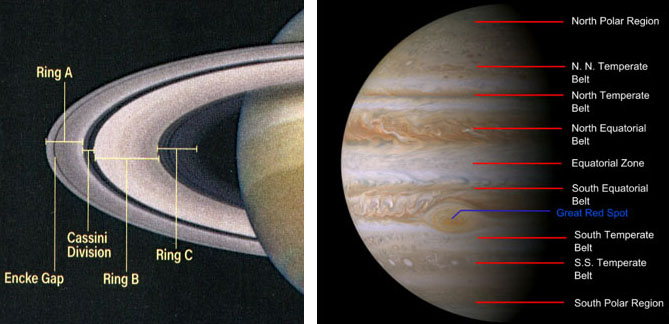
Saturn's rings and Jupiter's belts
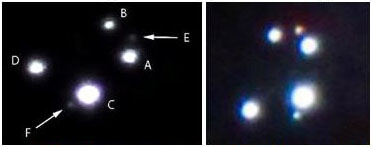
The Trapezium (Theta 1 Orionis)
When Orion is up I always check out M42 the Orion Nebula and the Trapezium located within it. When looking at the Trapezium I look for the "E" and "F" stars. Usually I cannot see them but when the seeing is good and using high power I can usually make out "E" and sometimes "F". Which is odd since "F" should be brighter than "E".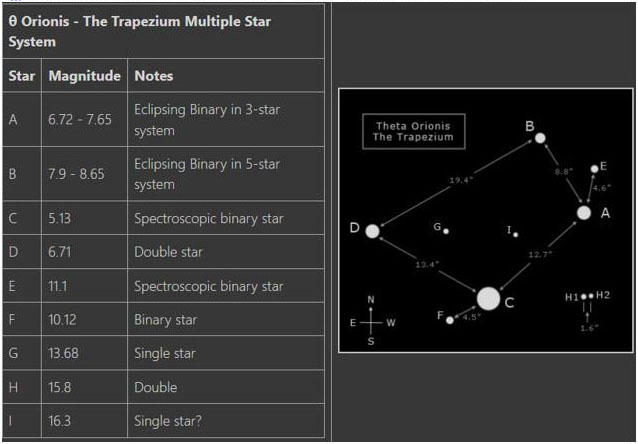
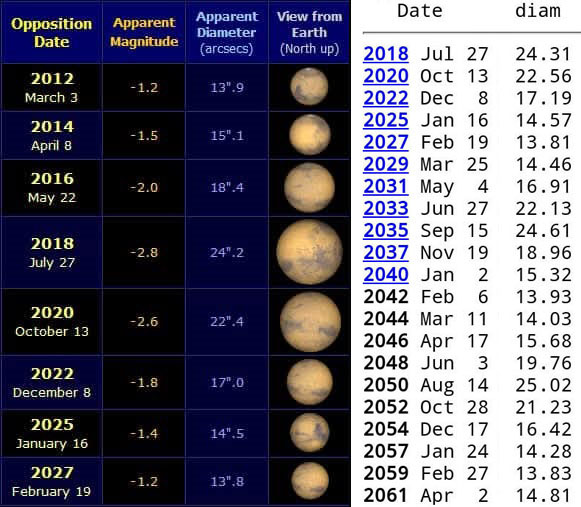
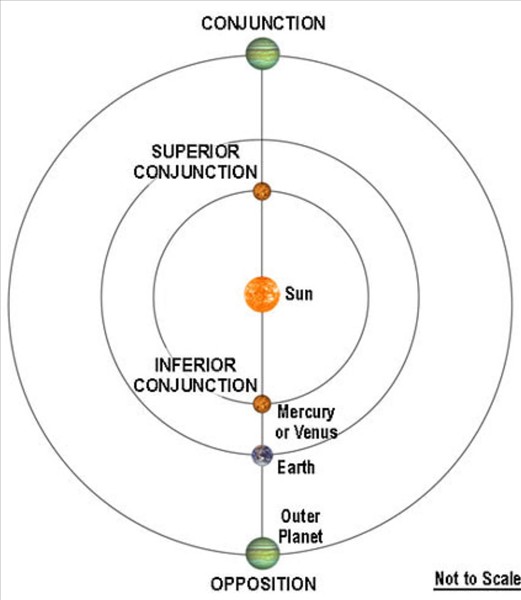
Mars Apparent Size and Oppositions
Tablet Settings for maintaining eye dark adpatation

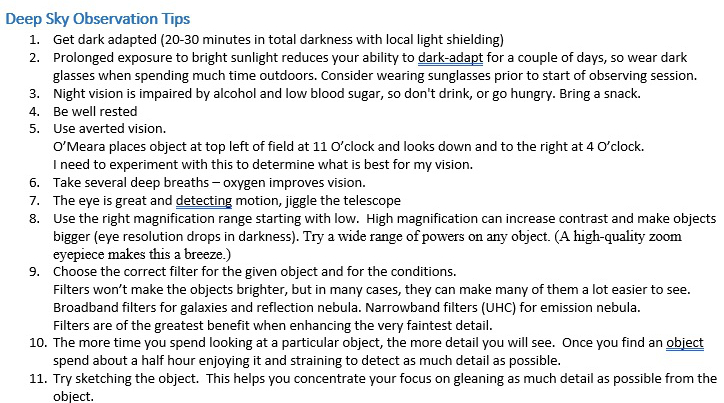
Deep sky observation tips
Things to note when observing deep sky objectsGeneral - Descriptions at various magnifications, direct and averted vision comments, and filter comments and any friends who I looked at it with or anything else interesting that is happening at same time. Nebulas - Stellar, Disk, Ring, Bi-Polar, Shells, Shapes, Orientation, Color, Brighter areas, Central star visible, Blink Globular Clusters • Shape, Core location (e.g. Core is centered to NW of cluster), bright areas, number of stars. • Unresolved - looks like a nebula with no stars. • Partially Resolved - most of the outer stars are seen and averted vision shows some brighter members of the core. • Moderately Resolved - note percentage of core where stars can be seen. e.g. Stars resolve to outer 50% of core with an unresolved dead center. Carbon Stars • Color using terms like "deep red," "ruby red," "pumpkin orange" • Star's relative brightness compared to other stars in the field of view • Emphasize that the colors of carbon stars are often more saturated than those of ordinary red giants. • Mention if the carbon star stands out in a field of blue-white or yellow stars. • Technique like defocusing the image can help to reduce the Purkije effect and highlight the color of the star • Technique like averted vision. Galaxies • The shape (round, oblong, edge on), Envelope orientation (e.g. NW ot SE), Structure (is a bar visible, are arms visible) • Mottling - the brightness of the envelope is not uniform (like rippling). • The brightness of the envelope fades off at the edges can be described as "poorly defined" or "indistinct". • A common description for many galaxies I've seen might be, the distinct core is surrounded by a large, bright and soft glow that fades smoothly into the sky background. • A dark line might be an absorption feature, such as a dust lane or gas cloud in the plane of the galaxy - the Sombrero Galaxy (M104) is an excellent example of this. • A brighter line might be the central bar if the galaxy is a barred spiral. • Any notable field stars or other objects in the field (other galaxies, globular clusters, PNs, etc) • Great page of sketches of Messier Galaxies Open Clusters - Number of stars, density of star field, any nebulosity, colors |
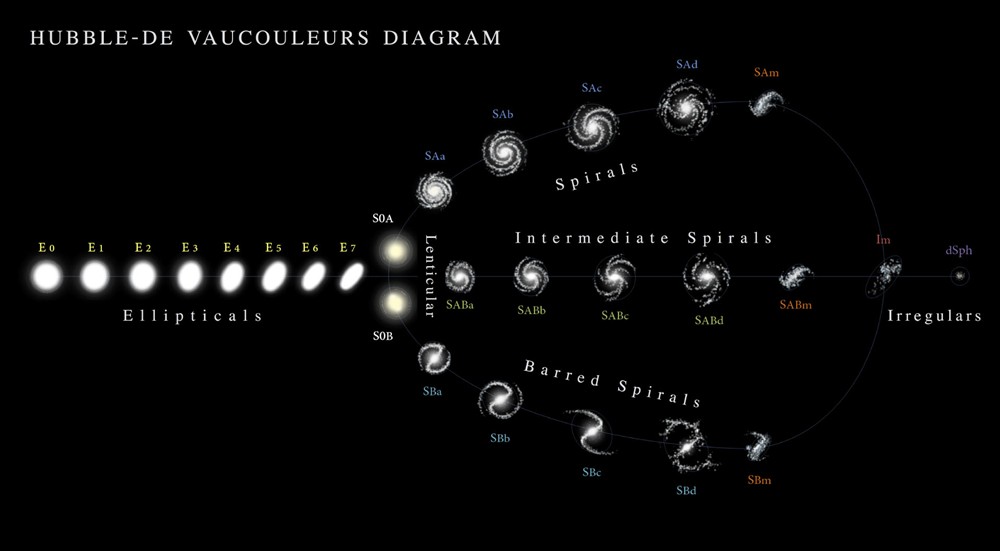
Galaxy Type Descriptions
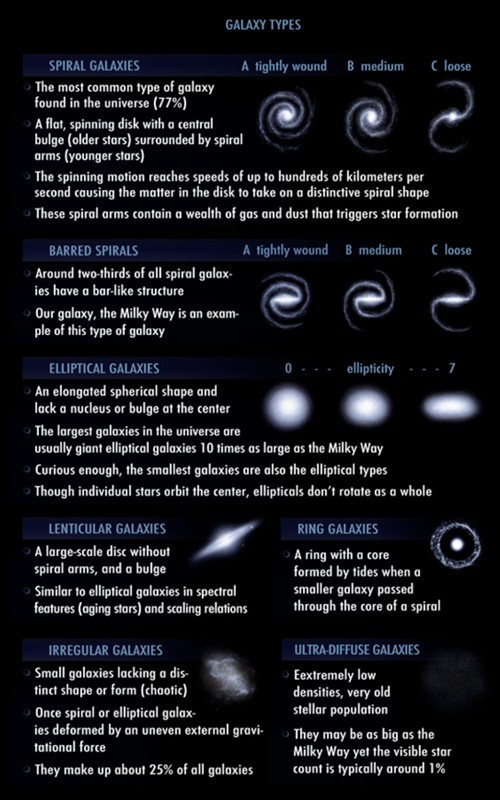
Barred spiral galaxies in Messier's catalogue are Messier 58 (SAB(rs)b), Messier 91 (SBr), Messier 95 (SB(r)b) and Messier 109 (SB(rs)bc),
Nebula TypesEmission NebulaAn emission nebula is a cloud of high temperature gas. Within this type of nebula, a star energizes the atoms in the cloud with ultraviolet radiation. As these atoms fall back to lower energy states, they emit radiation. The process is similar to that of a neon light. This causes the nebula to glow. Emission nebulae tend to be red in color because of the abundance of hydrogen. Additional colors, such as blue and green, can be produced by the atoms of other elements, but hydrogen is almost always the most abundant. A fine example of an emission nebula is the Orion Nebula (M42).Reflection NebulaA reflection nebula differs from an emission nebula in does not emit radiation of its own. It is a cloud of dust and gas that reflects the light energy from a nearby star or group of stars. Reflection nebulae are frequently the sites of star formation. They usually tend to be blue in color because of the way that the light is scattered. Blue light is scattered more efficiently. The Trifid Nebula (M20) in Sagittarius is a good example of a reflection nebula.Dark NebulaA dark nebula is a cloud of dust that blocks the light from objects behind it. They are very similar to reflection nebulae in composition and look different primarily because of the placement of the light source. Dark nebulae are usually seen together with emission and reflection nebulae. The Horsehead Nebula in Orion is probably the most famous example of a dark nebula. It is a dark region of dust in the shape of a horse's head that blocks the light from a much larger emission nebula behind it.Planetary NebulaA planetary nebula is a shell of gas produced by a star as it nears the end of its life cycle. Their name can be a bit misleading. They actually have nothing to do with planets. These nebulae were given this name because they often look like planets due to their round shape. The outer shell of gas is usually illuminated by the remains of the star at its center. The Ring Nebula (M57) in Lyra is one of the best examples of a planetary nebula.Supernova RemnantSupernova remnants are created when a star ends it life in a massive explosion known as a supernova. The explosion blows a large amount of the star's matter out into space. This cloud of matter glows with the remains of the star that created it. One of the best examples of a supernova remnant is the crab Nebula (M1) in Taurus. It is illuminated by a pulsar which was created by the supernova. |
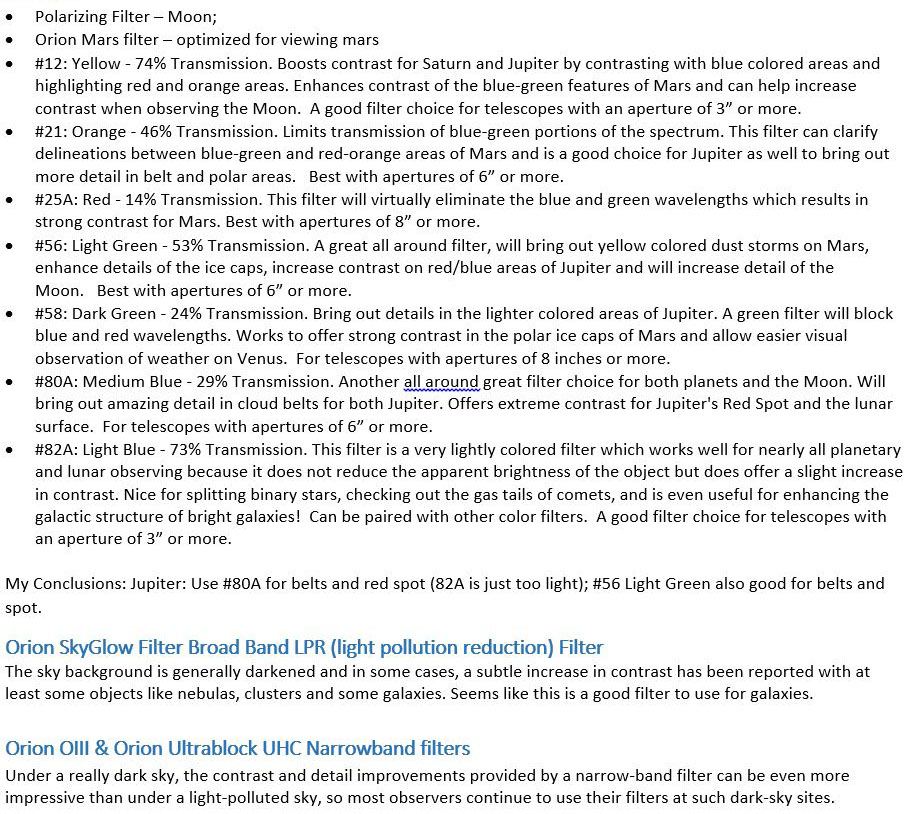
Filters
How to check battery status in SkySafari

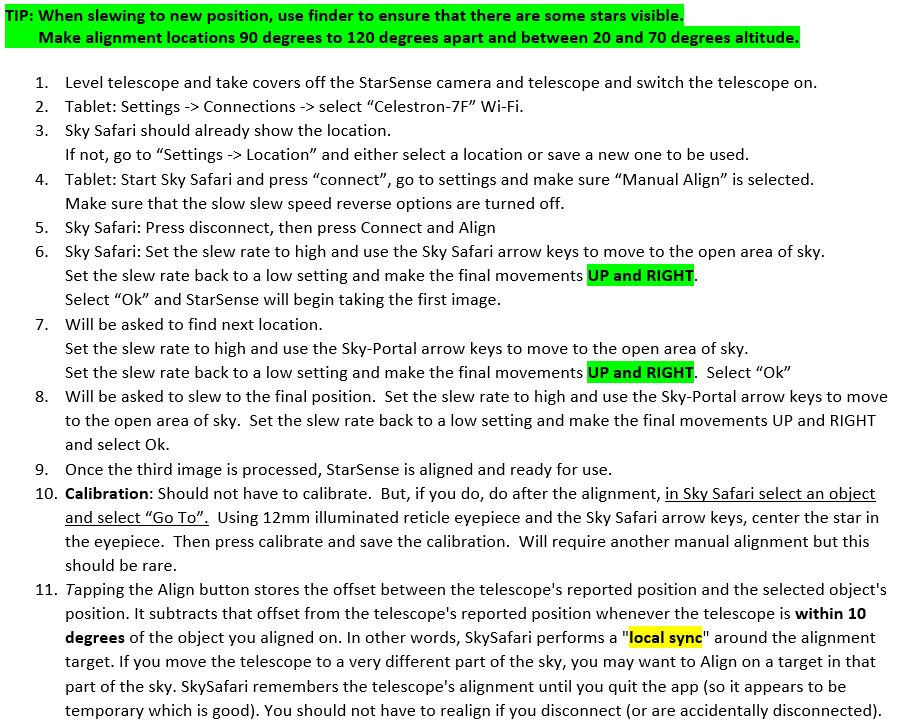
How to do a star sense alignment
My Celestron Evolution 8" Schmidt-Cassegrain Telescope
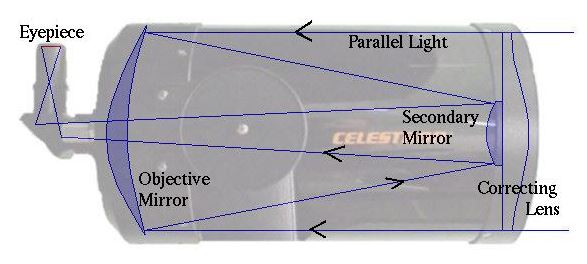
| The Schmidt-Cassegrain (SCT) optical system uses a combination of mirrors and lenses and is referred to as a compound or catadioptric telescope. This unique design offers large-diameter optics while maintaining very short tube lengths, making them extremely portable. The Schmidt-Cassegrain system consists of a zero power corrector plate (usually the mounting point for the secondary lens - to correct for spherical aberration), a spherical primary mirror, and a secondary mirror. Typical focal ratio is f/10. |
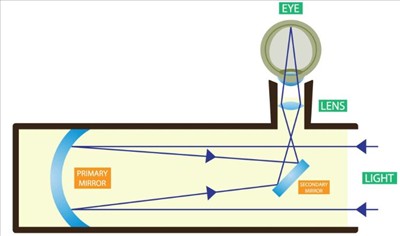
Dobsonian Light Path
Some Fun Facts
| The Universe - The universe is all of space and time and their contents. It is estimated to be about 13.8 billion years old and contains approximately 200 billion trillion stars. |
| Galaxies - There are typically 100 billion stars in a galaxy, there are about 2 trillion galaxies in the universe. |
| M31 The Andromeda Galaxy - Is ~2.5 million light years away and approximately 1 trillion stars and is ~152,000 light years in diameter. The Milky Way and Andromeda galaxies are expected to merge in around 4-5 billion years. |
| The Milky Way - Our galaxy contains about 100 to 400 billion stars and is ~87,000 light years in diameter. |
| Globular Clusters - The Milky Way is host to around 150 known globular clusters. A globular cluster is a spheroidal conglomeration of stars that is bound together by gravity, with a higher concentration of stars towards their centers. They can contain anywhere from tens of thousands to many millions of member stars, all orbiting in a stable, compact formation. Some are among the oldest objects in their galaxies and even the universe, constraining estimates of the universe's age. |
| M13 The great globular cluster in Hercules is ~25,000 light-years away and is estimated to be 11.65 billion years old with 300,000 to 500,000 stars and is about 145 light-years in diameter. |
| Sun - Has a diameter of 865,370 miles and is 109 times larger than the earth. The earth is 170mh (millionths of a solar hemisphere). Over a million earths could fit inside the sun. It takes sunlight 8.4 minutes to reach earth. The sun's surface temperature is 10,000F. On average, a sunspot is about the same size as Earth. See Solar Activity for current sunspot activity. |
| Earth - Has a diameter 7,918 miles. |
| Moon - Luna has a mass 1.2% that of the earth's and has a diameter of 2,159 miles (~1/3 of the earth's diameter). Approximately 50 moons could fit inside the earth. Its surface gravity is about one-sixth of Earth's, about half that of Mars. It is about 239,000 miles from earth and it takes light 1.28 seconds to arrive. • Mare Crisium has a diameter of 345 miles. • Copernicus has a diameter of 58 miles and is 2.4 miles deep. • Tyco has a diameter of 53.4 miles and is 2.9 miles deep. • The Apenninus mountain range has a total length of about 370 miles with some of the peaks rising as high 3.1 miles. • Lunar Patterns on the moon |
| Planetary Nebulas - Are formed when the central star, during the last stages of its evolution before becoming a white dwarf, expels a vast luminous envelope of ionized gas into the surrounding interstellar space. |
| M27 The Dumbbell or Applecore Nebula - It is ~1300 light-years away and is ~14,600 years old. It was the first planetary discovered in 1764 by Charle Messier. |
| M57 The Ring Nebula - It is ~2500 light years away and is ~7000 years old. |
This page last updated on 1/6/2026 10:11:02 AM. If you have comments or suggestions, email me at webmaster@jscheetz.com